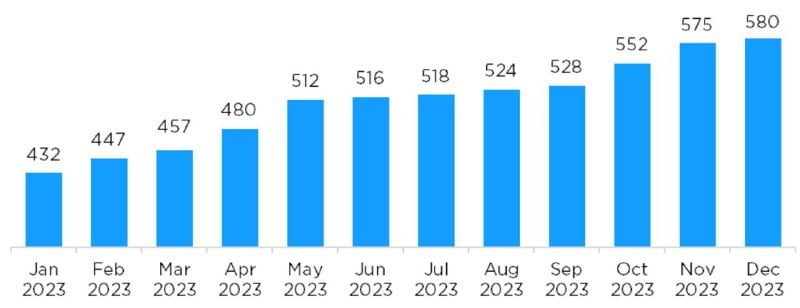
617 Million Crypto Users—But How Many Actually Use It?
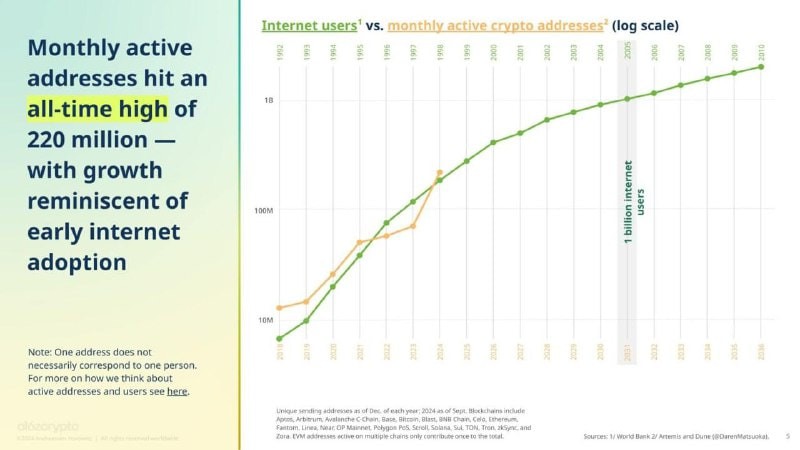
According to a recent a16z Crypto study, there are now 617 million crypto users worldwide. That headline number sounds massive—and in many ways it is. The report also notes that activity and usage have reached an all-time high.
But when you look one layer deeper, the picture gets more nuanced.
Why on-chain activity spiked
A big driver behind the recent surge is the attention around memecoins on Solana. The report attributes roughly 100 million active addresses to Solana’s wave of meme-token activity. As a result, in September, around 220 million wallets interacted with a blockchain at least once.
That’s an important milestone for the industry: it shows how quickly narratives and consumer speculation can translate into on-chain behavior.
“Users” vs. actual users
At the same time, averages remain much more modest. Analysts estimate that the number of actual crypto users—people who use crypto meaningfully rather than just touching a wallet once—may be only 5–10% of that broad total. In absolute terms, that’s about 30–60 million people.
Put differently: active crypto usage is still under 1% of the world’s population.
For comparison, the share of adults with a bank account was about 76% globally (as of 2021).
Was crypto supposed to “kill banks”? Did the mission fail?
Not long ago, many people genuinely believed blockchain would become a direct killer of the banking system. Today, that prediction feels almost forgotten.
So—mission failed?
I think that conclusion is premature, and mostly a matter of time horizon.
The banking system has existed for centuries—arguably even before the common era in various forms. Meanwhile, the first Bitcoin transaction happened only about 15 years ago. Expecting a global financial stack to be replaced in a decade and a half is… ambitious.
My takeaway
The numbers tell me two things at once:
- Crypto has real momentum—millions of people are entering the ecosystem and experimenting on-chain.
- We’re still early in “everyday utility” adoption—the gap between total users and active users is still huge.
The next phase isn’t just about onboarding more wallets. It’s about increasing the share of people who use crypto repeatedly because it solves something: payments, savings, identity, ownership, access—pick your thesis.
What do you think about the current user growth dynamics? Are we seeing sustainable adoption, or mainly cyclical activity driven by speculation?

Alex Meleshko
Entrepreneur, CEO, and builder at the intersection of blockchain, AI, and startups.
Comments
No comments yet. Be the first!