What $6M of Weekly Volume on Polygon Tells Us About Web3 Gambling
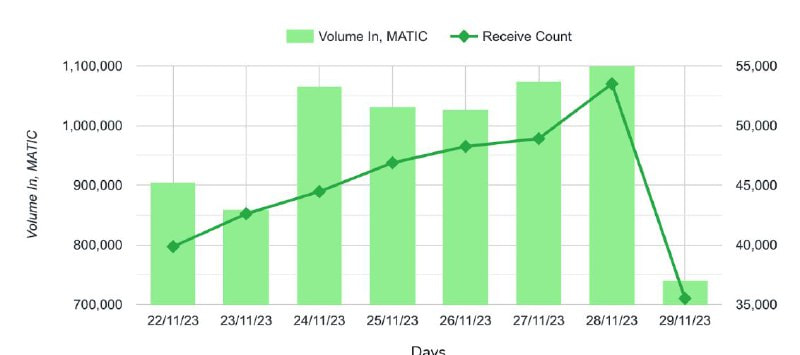
I recently did some research for a client on a Web3 game running on Polygon (MATIC): trade.playnance.com. The on-chain numbers are public, so there’s nothing confidential here—but the scale is interesting, and it says a lot about where the market is today.
On-chain volume: last 7 days
Over the last 7 days, the smart contract received 7.81M MATIC (about $5,957,399). That’s roughly $851,057 per day in incoming volume.
Fees, revenue, and gas costs
With a 9% fee (a commission taken from losing bets), the business revenue works out to about:
- $36,860 per day in fees
- Approximately $35,253 in gas costs (marketing expenses not included)
The main takeaway from these raw numbers: at this scale, unit economics can look very different depending on how the contract is designed, how many transactions are being executed, and what portion of activity is routed on-chain.
What I take away from this
- Players don’t care what’s “under the hood.” The product includes a server-side component, and that’s increasingly normal. A few years ago, the narrative was “smart contracts will change everything.” Today, the top products are often hybrid apps. Fully decentralized projects still struggle with a more complex UX—especially when interacting directly with contracts and wallets.
- Not all volume necessarily comes from “crypto natives.” There’s a non-custodial approach to betting, but users can also fund a virtual balance by card. It’s also possible for systems to generate addresses for users—meaning the user experience can feel more Web2-like, while settlement happens via crypto rails.
- Distribution can be partner-driven. The project operates as a white-label solution with 20+ partners. So a meaningful part (or even most) of the volume could be coming from partner traffic rather than a single brand’s direct marketing.
- Marketing wins. In practice, product + distribution beats ideology. The chain matters, but acquisition and retention matter more.
Should I publish more Web3 project breakdowns?
I can share more reviews like this—numbers, business models, and what actually seems to be working in Web3 today. If that’s useful, let me know what formats you’d prefer: short posts, deeper case studies, or a recurring “weekly metrics” column.

Alex Meleshko
Entrepreneur, CEO, and builder at the intersection of blockchain, AI, and startups.
Comments
No comments yet. Be the first!