How I Automated Blog Posts from Telegram to My Personal Blog (and Why I Switched to Next.js)
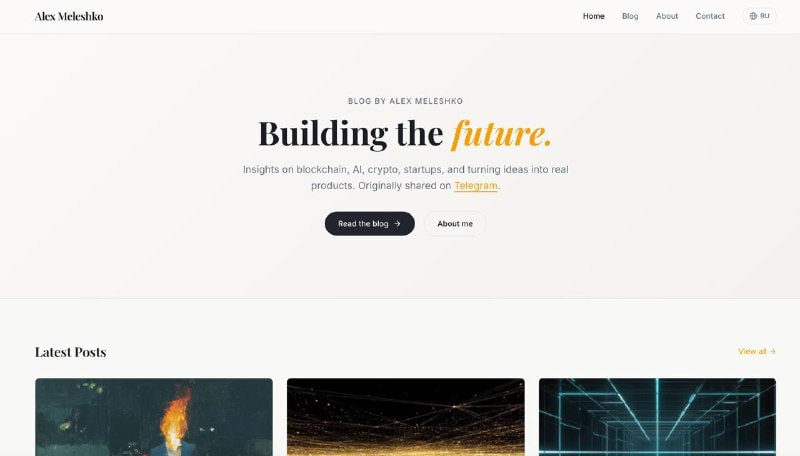
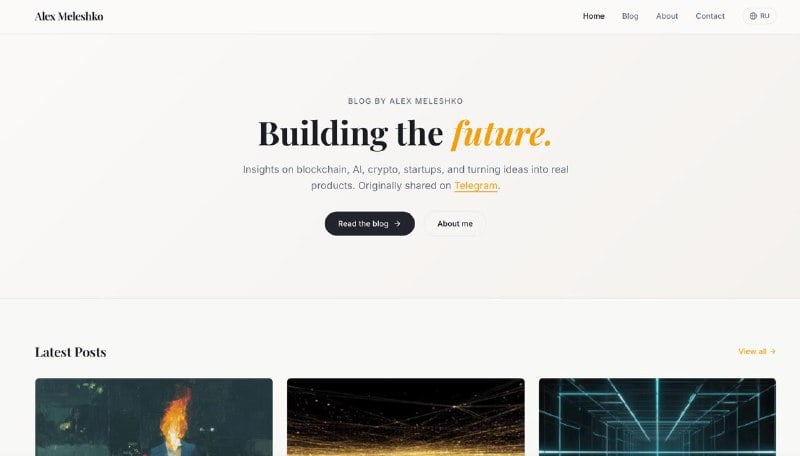
I decided to create a very simple blog on my own website—one where I could automatically transfer my posts from Telegram without spending time on manual formatting and publishing.
The goal was purely practical:
- to build my personal brand;
- to capture potential SEO traffic;
- to index the domain under my name;
- to publish everything automatically, minimizing manual effort.
Additional Features
In parallel, I integrated GPT to automatically fill in metadata (titles, descriptions, etc.). Plus, I enabled publication in two languages and set up a basic admin panel: you can import posts from Telegram and make manual edits if necessary.
At first, everything seemed perfect: I quickly assembled it, launched it in production, and it all worked beautifully. But soon, an important issue surfaced.
The Key Issue: Indexing and SSR
Initially, I built the project on Lovable, with a front-end primarily in React. At some point, it hit me: this setup didn't make sense for my needs. I needed a blog that search engines could properly index, which meant I needed SSR (server-side rendering).
I moved everything to Cursor, rewrote it in Next.js, checked how bots viewed the pages—and everything started working as intended.
The Final Tech Stack
The stack ended up being:
- Lovable + Cursor + Next.js + Vercel
What I Learned About Vibe Coding in Practice
In short, it's a very fast way to build a functioning product, especially for small services or personal tools. But there are caveats.
Pros
- you can quickly assemble a working project within reasonable limits;
- it's enjoyable to work with—when you're in the flow, you really "fly";
- everything is conveniently gathered in one place;
- for simple services, it's pure bliss;
- at times, it feels almost magical.
Cons
- expensive;
- tokens deplete very quickly;
- if the project becomes complex, Lovable starts to slow down, get confused, and struggles to maintain logic;
- fixing minor bugs can cost more than the first 80-90% of the project.
For example, building the basic structure cost me about $10, and then another $40 went into fixing small issues and tweaks.
But even so—honestly—with WordPress, it would have taken me longer and been more frustrating.
Conclusion
Vibe coding is great for quick launches, tests, and personal small products. Not without pain. Not free. But very fast—and very addictive.
It seems like my new hobby. While the team is working on substantial projects, I'm enjoying these experiments on the side.
I think I'll build more of these mini-projects.

Alex Meleshko
Entrepreneur, CEO, and builder at the intersection of blockchain, AI, and startups.
Comments
No comments yet. Be the first!