Why AI Companies Need Philosophers and Psychologists
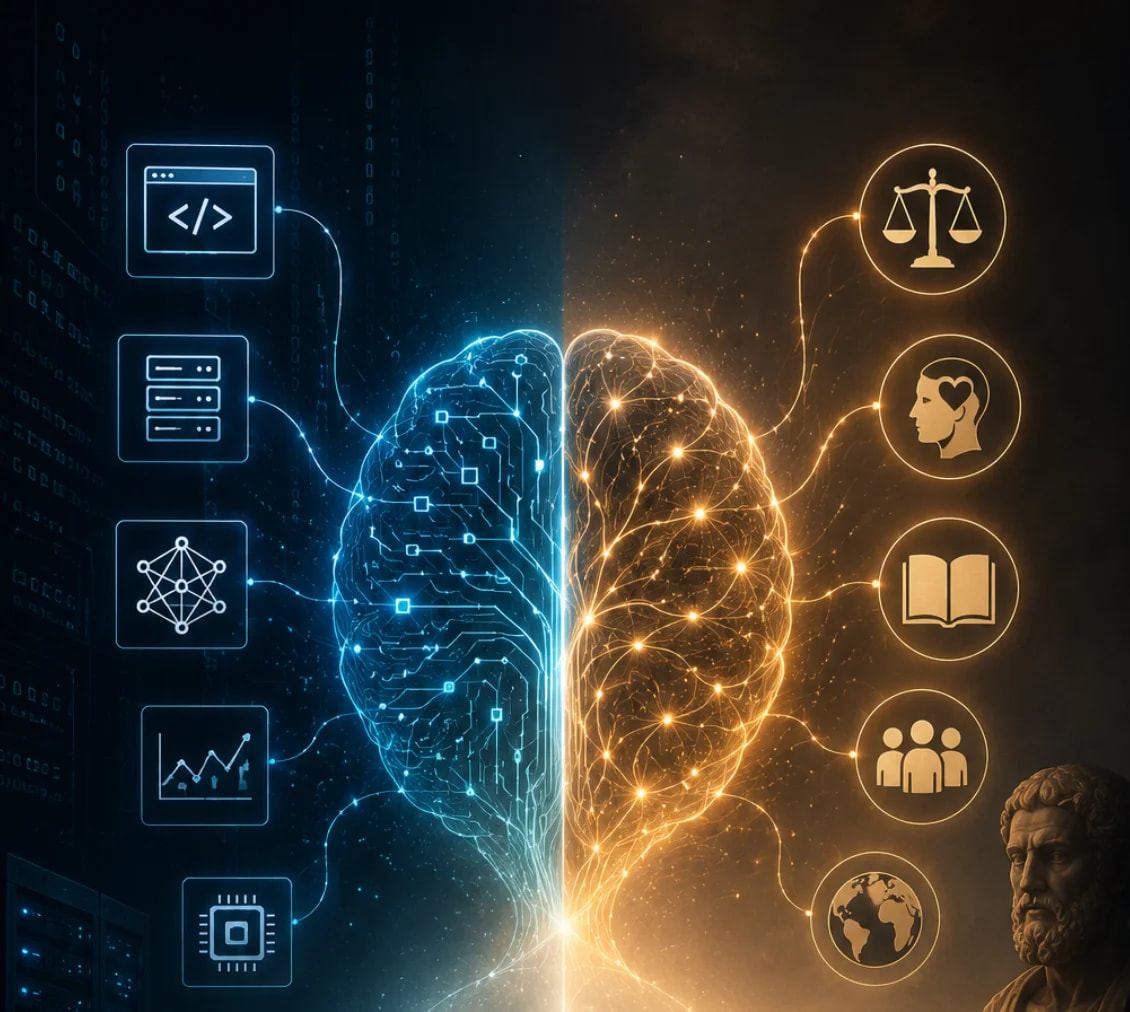
In recent years, it has become evident that success in developing artificial intelligence depends not only on engineering prowess and mathematical achievements. Increasingly, AI companies face challenges that cannot be solved solely with code and algorithms. In this context, the importance of humanities experts, such as philosophers, psychologists, and ethics specialists, is growing.
New Challenges for AI Companies
With the development of powerful AI models, companies are beginning to encounter issues that touch on human values and the interaction of technology with society. Engineers remain crucial, but now their efforts are complemented by the insights of philosophers, psychologists, and cognitive science specialists. These changes are driven by the fact that AI models are starting to impact various aspects of human life: from finance and education to politics and medicine.
The Impact of AI on Human Decisions
- Financial decisions and transaction security
- Influence on political views and public opinion
- Decisions in medicine and education
- Ethical issues in user interaction
With such challenges arising, it becomes critically important to determine how an intelligent system should behave when it encounters human values and conflicts. At this stage, new demands are being placed on AI teams.
Problems Requiring a Humanities Approach
Goal Conflicts and Ethics
When an AI model becomes an agent capable of making decisions, the cost of mistakes increases significantly. Errors can lead to data breaches, incorrect transactions, or unhelpful advice. Therefore, AI companies need to predefine which actions are permissible and which require confirmation. This requires not only engineering knowledge but also an understanding of logic, psychology, and philosophy.
Safety and Trust
One of the most challenging tasks is maintaining a balance between the safety and utility of AI. The model must be useful yet safe, non-manipulative, and honest. How AI is perceived by users and how it interacts with them in real situations depends on this balance.
The Dangers of Blind Trust in AI
People tend to trust AI, especially when it communicates confidently and structurally. This can lead to serious consequences if AI makes mistakes in areas like medicine, law, or finance. Therefore, companies should develop interfaces that explain the level of risk and uncertainty to users and prevent a false sense of security.
Ethics and Cultural Differences
When we talk about AI ethics, the question arises: whose values should the model reflect? Rules and norms vary depending on the region, culture, and legislation. This makes it necessary to involve specialists in political philosophy, law, and international relations.
Why AI Companies Need Philosophers and Psychologists
Philosophers and psychologists in AI companies do not just ponder the future of humanity. They help develop logical systems, work with uncertainty, and formulate complex concepts in an accessible form. These specialists play a key role in creating AI that is not only technically advanced but also socially responsible.
Reflections in Business
These issues are relevant not only for large AI labs. Any business that implements AI faces similar challenges. Sending messages to clients, changing data, or making automatic decisions—all these tasks require a comprehensive approach that considers both technical and humanities aspects.
Thus, AI companies need humanities experts not because technology has become less complex, but because it has become too close to humans. This requires new approaches in the development and implementation of AI, so that it is not only intelligent but also safe and understandable for people.

Alex Meleshko
Entrepreneur, CEO, and builder at the intersection of blockchain, AI, and startups.
Comments
No comments yet. Be the first!