Asset Control in Web3: Custodial vs. Non-Custodial Wallets

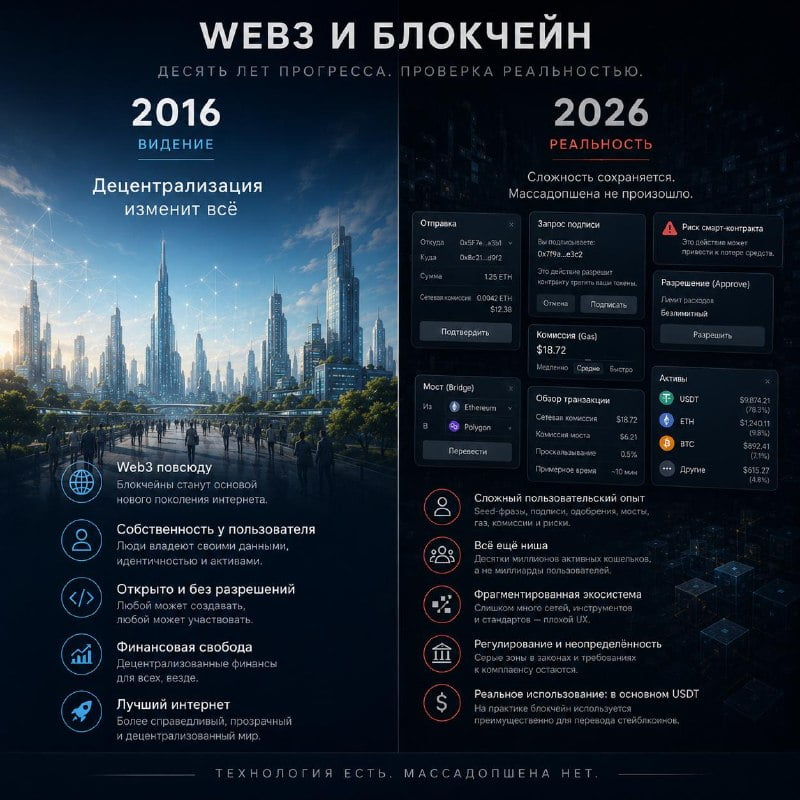
In recent years, the Web3 space has been engaged in active discussions about various aspects, such as tokenomics, smart contracts, blockchains, and wallet integrations. However, one of the key questions concerning Web3 products often remains overlooked: who will control the user's assets if your product disappears?
Custodial and Non-Custodial Wallets: What's the Difference?
When developing Web3 products, developers face a choice between custodial and non-custodial wallets. This choice is critical for the control over user assets.
Custodial Wallets
A custodial wallet means that the company controls the keys and signs transactions. This allows the company to freeze, restore, or move funds according to its rules. This model is convenient for users due to:
- login via email or phone;
- easy access recovery without a seed phrase;
- simplified automation and anti-fraud systems;
- minimizing blockchain complexities for the user.
However, custodial wallets have a significant drawback: the user does not fully own their asset. If the platform freezes access or changes the rules, the user may lose control over what they considered theirs.
Non-Custodial Wallets
Non-custodial wallets offer a different approach, keeping asset control with the user. Even if the wallet interface is integrated into the product, the assets remain independent and can be verified on the blockchain. This allows the user to:
- log in via email or social networks;
- avoid network complexities and receive support in access recovery;
- transfer assets to other interfaces or applications.
Thus, even if a startup ceases to exist, the user retains control over their assets.
Hybrid Models and the Future of Web3
In my opinion, the future lies in hybrid models that combine the advantages of both approaches. In practice, this might look like:
- non-custodial wallets for user assets;
- server-based wallets for managing treasury and rewards;
- support for recovery, MFA, limits, and security policies;
- human confirmation for critical actions.
The key question is not whether the user should store a seed phrase. More importantly, they should retain control over the assets that truly matter to them. A good Web3 product should provide the convenience of Web2 without turning ownership rights into an entry in someone else's database.
Do you think embedded self-custody will become the standard for mainstream Web3 products, or will the custodial model remain more convenient for most users?

Alex Meleshko
Entrepreneur, CEO, and builder at the intersection of blockchain, AI, and startups.
Comments
No comments yet. Be the first!